What No One Tells You About Cancun’s Architecture
When you think of Cancun, beaches and nightlife probably come to mind—but its architecture? Not so much. I didn’t expect to be wowed by buildings on a tropical getaway, yet everywhere I looked, design stories unfolded. From Mayan-inspired resorts to sleek modern condos, Cancun’s structures are more than just backdrops—they shape the experience. This is a side of Cancun rarely talked about, but totally worth seeing. Let’s dive into the styles that define this vibrant city.
First Impressions: Beyond the Beachfront Glamour
Upon arrival in Cancun, the city reveals itself in layers—first the shimmer of turquoise water, then the rhythmic pulse of beachfront energy, and finally, the quiet narrative of its built environment. While postcards celebrate sunbathers and cocktails, the city’s architecture tells a story of intention, adaptation, and vision. Designed from the ground up as a tourist destination in the 1970s, Cancun was never meant to be a spontaneous urban growth. Instead, it was master-planned with precision, guided by Mexico’s National Tourism Development Program. The result? A city where form follows function, especially in the iconic Hotel Zone—a 14-mile stretch of land jutting into the Caribbean Sea, shaped like a number 7.
The layout of the Hotel Zone reflects a balance between accessibility and environmental resilience. Wide, tree-lined boulevards like Boulevard Kukulcán allow for smooth traffic flow while providing shade and storm drainage. Buildings are often elevated, not just for panoramic views but for practical flood mitigation during hurricane season. This foresight is crucial in a region where tropical storms can bring heavy rains and storm surges. Architects and urban planners had to consider not only aesthetics but survival, ensuring that infrastructure could withstand nature’s unpredictability. Even the orientation of buildings is calculated—angled to catch sea breezes and reduce reliance on air conditioning.
Contrast this with downtown Cancun, known locally as El Centro, and the architectural philosophy shifts dramatically. Here, the city feels more organic, less polished, and deeply rooted in daily life. The streets are narrower, the buildings closer together, and the colors more vivid. While the Hotel Zone was built for visitors, El Centro exists for residents. Its architecture reflects necessity: affordability, heat resistance, and community access. Yet, both areas are essential to understanding Cancun’s identity—one designed for spectacle, the other for sustenance. Together, they form a duality that defines the city’s character.
Mayan Revival: When Culture Meets Concrete
One of the most visually striking aspects of Cancun’s resort architecture is the widespread use of Mayan Revival design. This style draws direct inspiration from the ancient civilizations that once thrived across the Yucatán Peninsula. Stepped pyramids, stone-like facades, and intricate geometric patterns are not merely decorative—they are symbolic gestures that connect modern tourism with deep cultural roots. At luxury properties like those in the Grand Residences or Hyatt Ziva complexes, guests enter through grand archways reminiscent of El Castillo at Chichén Itzá, or walk through courtyards aligned with celestial patterns, echoing the astronomical knowledge of the Maya.
Why do developers lean so heavily on this aesthetic? The answer lies in authenticity. Travelers today seek more than comfort—they want meaning. A resort that incorporates Mayan motifs isn’t just selling a room; it’s offering an experience rooted in place. These designs serve as quiet educators, introducing guests to Mesoamerican heritage without requiring a museum visit. Carvings of jaguars, serpents, and deities appear subtly in stonework or tile patterns, each carrying symbolic weight. Even the color palette—earth tones, terracotta, and oxidized greens—mirrors the natural and built environments of ancient Mayan cities.
However, this architectural homage must be handled with care. When done respectfully, Mayan Revival design honors tradition. When overdone or reduced to cliché, it risks becoming cultural appropriation. The best examples integrate elements thoughtfully, working with local artisans and historians to ensure accuracy and dignity. Some resorts partner with cultural foundations to display authentic artifacts or host educational talks, deepening the connection between guest and heritage. In these spaces, architecture becomes a bridge—not just between past and present, but between visitor and host community.
Modern Minimalism in the Hotel Zone
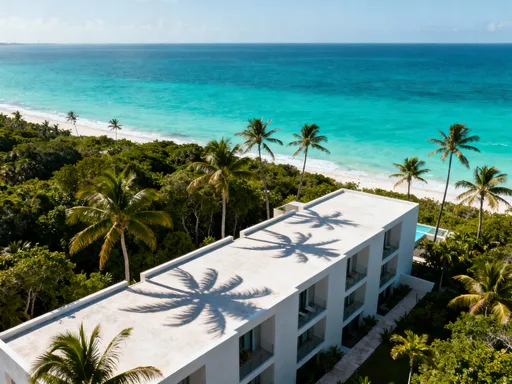
While Mayan Revival dominates many high-end resorts, a growing number of properties in the Hotel Zone embrace a different philosophy: modern minimalism. These buildings prioritize clean lines, open spaces, and seamless indoor-outdoor living. Think floor-to-ceiling glass walls, flat roofs, and monochromatic palettes punctuated by bursts of greenery or ocean views. The goal is not to impress with ornamentation, but to disappear—letting the natural beauty of the Caribbean take center stage.
This design trend reflects a global shift in luxury travel, where exclusivity is measured not by opulence but by tranquility and integration with nature. Properties like those in the Thompson or NIZUC Resort collections feature cantilevered suites that extend over the water, infinity pools that blur the line between pool and sea, and minimalist interiors with natural materials like teak, linen, and travertine. These choices are not just aesthetic—they are functional. Large overhangs provide shade, reducing solar heat gain. Strategic window placement captures cross breezes, minimizing the need for artificial cooling. Even the orientation of the buildings is optimized to follow the sun’s path, enhancing energy efficiency.
Modern minimalism also responds to the expectations of a new generation of travelers—those who value experiences over extravagance. They want spaces that feel personal, calm, and uncluttered. In this context, architecture becomes a tool for well-being. The absence of visual noise allows guests to focus on what matters: the rhythm of the waves, the warmth of the sun, the presence of loved ones. It’s a quiet rebellion against the idea that luxury must be loud. In Cancun’s minimalist spaces, luxury is silence, space, and light.
El Centro’s Everyday Urban Fabric
Just a short bus ride from the polished perfection of the Hotel Zone lies a very different Cancun—El Centro, the city’s downtown heart. Here, the architecture is not designed for Instagram, but for living. Brightly painted cinderblock homes stack side by side, their facades adorned with hand-painted signs, laundry lines, and potted plants. Roofs are often made of corrugated metal, practical and affordable, though less elegant than tile or concrete. Ground floors open directly onto the street, housing small shops, taco stands, and family-run businesses that pulse with daily life.
This urban fabric is shaped by economic reality and climatic necessity. Most buildings are constructed with locally available materials, keeping costs low while allowing for quick repairs after storms. Walls are thick to insulate against heat, and windows are small to reduce solar exposure. Many homes feature internal courtyards, a design inherited from colonial and indigenous traditions, providing private outdoor space and natural ventilation. These courtyards often host gardens, washing areas, or seating—a microcosm of family life shielded from the street.
Despite its unassuming appearance, El Centro’s architecture reveals resilience and community. Buildings are not isolated; they are part of a network of relationships. Shops double as homes, homes open to neighbors, and public spaces are used organically—benches become gathering spots, sidewalks turn into playgrounds. This is architecture shaped by people, not planners. It lacks the grandeur of resorts, but it possesses something more valuable: authenticity. For travelers willing to step off the beaten path, El Centro offers a chance to see how real Cancunians live, work, and thrive.
Sustainable Shifts: Eco-Conscious Design on the Rise
As climate change and environmental degradation become urgent global concerns, Cancun’s architecture is beginning to reflect a new priority: sustainability. A growing number of developments are moving beyond aesthetics to address ecological impact. Eco-resorts like Banyan Tree Mayakoba and Habitas Tulum—though located just outside Cancun proper—are setting benchmarks for green design that influence the broader region. These properties use recycled materials, solar energy, rainwater harvesting, and natural ventilation systems to minimize their footprint.
One of the most visible sustainable features is the use of permeable surfaces. Instead of concrete, walkways are made from gravel, wood, or porous stone, allowing rainwater to seep into the ground rather than run off into drains. This helps prevent flooding and recharges underground aquifers, which are vital in a region with limited freshwater resources. Buildings are often raised on stilts, not only to avoid flood damage but to allow jungle undergrowth to continue thriving beneath. This approach preserves biodiversity and reduces land disruption.
Inside, eco-conscious design continues. Natural light floods through skylights and open layouts, reducing the need for electric lighting. Ceiling fans and cross-ventilation replace constant air conditioning, lowering energy consumption. Even furniture is chosen with care—bamboo, reclaimed wood, and organic textiles are common. Some resorts have eliminated single-use plastics entirely, offering glass bottles and refill stations instead. These choices are not just about being “green”—they enhance guest comfort by creating quieter, cooler, and more peaceful environments.
The shift toward sustainability is also driven by economic sense. Energy-efficient buildings have lower operating costs, making them more profitable in the long run. Moreover, travelers are increasingly drawn to eco-friendly options. A 2023 Booking.com survey found that 76% of global travelers want to stay in sustainable accommodations, and many are willing to pay more for them. In response, even mainstream hotel chains are incorporating green elements—LED lighting, water-saving fixtures, and waste reduction programs—into their properties. Sustainability is no longer a niche trend; it’s becoming standard practice.
The Role of Landscape in Architectural Flow
In Cancun, architecture does not exist in isolation—it is deeply intertwined with landscape. The city sits on a narrow strip of land bordered by the Caribbean Sea on one side and a network of lagoons and mangroves on the other. This unique geography demands a design approach that works with, not against, nature. The best examples of Cancun’s architecture do exactly that: they blend into the environment, guiding movement, enhancing views, and protecting ecosystems.
One of the most effective strategies is the use of green corridors—continuous strips of native vegetation that connect different parts of a resort or neighborhood. These corridors serve multiple purposes: they provide shade, support local wildlife, and act as natural drainage channels during heavy rains. Elevated walkways and boardwalks allow guests to move through sensitive areas like dunes or wetlands without disturbing the soil or roots. At the same time, they offer immersive experiences—walking above the jungle floor, spotting birds, or hearing the rustle of leaves.
Landscape also plays a role in privacy and comfort. Dense plantings of palms, bougainvillea, and gumbo-limbo trees create natural screens between rooms and public areas, reducing noise and visual clutter. Water features like lagoons and reflecting pools not only add beauty but help regulate microclimates by releasing moisture into the air. Even the placement of buildings is influenced by the land—avoiding dune destruction, preserving sightlines to the sea, and minimizing shadow on public beaches.
This integration is not just aesthetic; it’s protective. Mangroves, for example, are critical buffers against storm surges and erosion. When developers preserve or restore these ecosystems, they are investing in long-term resilience. In recent years, Mexican environmental regulations have strengthened protections for coastal zones, requiring impact assessments and mitigation plans before construction. As a result, new projects are more likely to incorporate landscape as a core design element, not an afterthought.
Why Architectural Awareness Enhances Travel
Most travelers experience architecture passively—walking through a lobby, sleeping in a room, snapping a photo of a facade. But when we begin to notice the “why” behind the design, our journey deepens. Understanding that a sloped roof helps with rain runoff, or that a courtyard aligns with the summer solstice, transforms a building from a static object into a story. It connects us to the people who built it, the culture it represents, and the environment it inhabits.
In Cancun, architectural awareness invites a more mindful way of traveling. It encourages us to look beyond the beach towel and see the city’s soul in its structures. The wide boulevards speak of hurricane preparedness. The Mayan motifs honor a civilization that measured time by the stars. The minimalist villas reflect a modern desire for peace and simplicity. Even the cinderblock homes of El Centro tell a story of resilience, family, and community.
This kind of observation doesn’t require an architecture degree—just curiosity. It starts with simple questions: Why is this building shaped this way? What materials were used, and why? How does it interact with the wind, the sun, the sea? These questions lead to richer conversations, deeper connections, and more meaningful memories. They also foster respect—for the environment, for local cultures, for the work that goes into creating welcoming spaces.
Moreover, architectural awareness can influence how we choose to travel. When we appreciate sustainable design, we’re more likely to support eco-conscious properties. When we value cultural authenticity, we seek out experiences that honor, rather than exploit, heritage. And when we recognize the intelligence behind resilient construction, we gain a new respect for the places we visit.
Cancun is more than a beach destination. It is a living laboratory of design, where climate, culture, and commerce intersect. Its architecture—whether grand or humble, ancient or modern—shapes how we move, rest, and connect. By paying attention to it, we don’t just see the city differently. We experience it more fully. So next time you stroll down Boulevard Kukulcán or wander through a downtown market, take a moment to look up, look around, and ask: What is this place trying to tell me? The answer might surprise you.