Lost in the Sky: Daegu’s Viewpoints That Stole My Breath
Wandering through Daegu, I wasn’t chasing landmarks—I was hunting perspectives. What I found weren’t just scenic overlooks, but moments suspended in light and silence. From misty morning ridges to cityscapes glittering at dusk, each viewpoint offered a different soul of the city. You don’t see Daegu from maps—you feel it from above. And honestly? I wasn’t ready for how deeply it moved me. This is a city that reveals itself slowly, not in postcard snapshots, but in quiet revelations found on forest trails, fortress walls, and glass-floored towers. Daegu is not loud or flashy, yet its heights carry a stillness that lingers long after you’ve descended. What follows is not a checklist, but an invitation to see the city through elevation, emotion, and unexpected clarity.
The Quiet Magic of Wandering Without a Map
There is a certain freedom in stepping out with no destination in mind. In Daegu, this kind of wandering isn’t just possible—it’s rewarding. The city, nestled between rolling hills and threaded by the flowing Geumho River, offers a rhythm that feels both urban and natural. When you release the pressure of a strict itinerary, you begin to notice the subtle transitions: the way residential streets gently climb into wooded paths, how a quiet alley opens onto a sudden view of the valley below. These are not marked on most tourist maps, yet they are where Daegu truly breathes.
The magic lies in the in-between moments. A morning mist curling over a stone bridge, the distant chime of temple bells carried on a breeze, the scent of pine as you turn a corner onto a shaded trail—these sensory details form the quiet poetry of exploration. Daegu does not demand your attention; it waits for you to notice. And when you do, you realize that the city’s beauty isn’t confined to its attractions, but lives in the spaces between them. This is where the most authentic experiences emerge—not from ticking boxes, but from pausing, listening, and allowing the landscape to speak.
Slowing down also changes how you move through space. Without the urgency of a schedule, you’re more likely to take the path less traveled, the one that winds uphill without a sign. You might stumble upon a small shrine tucked into the hillside or a bench with a view no one else seems to know about. These discoveries aren’t accidental; they’re the natural result of presence. In a world that often equates travel with efficiency, Daegu reminds us that some of the most meaningful moments come from getting slightly lost—then finding something better than what you were looking for.
Dongdaesong Fortress: Where History Meets Horizon
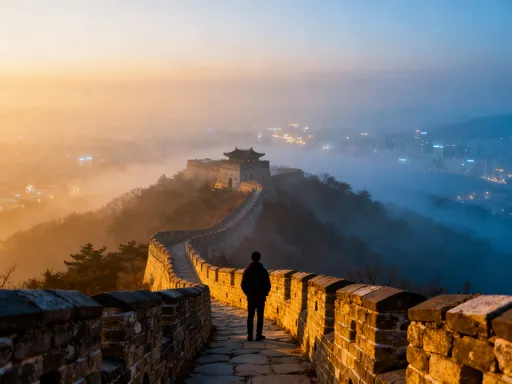
Rising above the eastern edge of central Daegu, Dongdaesong Fortress stands as a quiet sentinel of the past, offering one of the most rewarding panoramic views in the city. Originally built during the Joseon Dynasty as part of the city’s defensive network, the fortress has been carefully reconstructed to preserve its historical integrity while welcoming modern visitors. The climb to the top is part of the experience—a gentle ascent through quiet residential lanes, then into a tree-lined path that opens onto stone walls and sweeping vistas.
From the fortress walls, the city unfolds below like a living map. To the west, the modern skyline of Daegu’s business district glimmers in the daylight, while to the east, the slopes of Palgongsan Mountain stretch into the distance. What makes this viewpoint special is the way it frames time—ancient stone battlements in the foreground, contemporary life unfolding beyond. It’s a powerful reminder that Daegu is not a city frozen in history, nor one that has erased it, but one that carries both forward with quiet confidence.
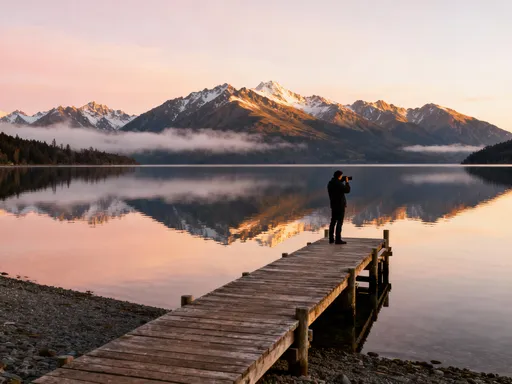
Sunrise at Dongdaesong is particularly moving. As the first light touches the eastern peaks, the city below begins to stir, and the sky shifts through soft hues of pink and gold. The air is cool and still, the only sound the rustle of leaves and the distant hum of waking streets. In these moments, the fortress feels less like a relic and more like a bridge—between past and present, stillness and motion, elevation and grounding. Whether you come for the history, the view, or simply the peace, Dongdaesong offers a perspective that is both expansive and intimate.
Palgongsan’s Summit Trail: Above the Clouds, Beyond the Crowd
For those seeking a deeper connection with nature, the trails of Palgongsan Mountain deliver breathtaking rewards without requiring expert hiking skills. One of the most accessible and scenic routes begins near Donghwasa Temple, a serene Buddhist monastery nestled into the mountainside. The path winds upward through dense forest, crossing wooden bridges over clear streams and passing ancient stone carvings along the way. Within an hour, even at a leisurely pace, hikers are rewarded with sweeping views that stretch across the Daegu basin.
The contrast between the temple grounds and the summit is striking. Below, Donghwasa radiates tranquility—its golden roofs glowing in the sun, incense drifting through the air, monks moving quietly through their daily routines. Above, the world opens up. From the higher ridges, the valley spreads out like a patchwork of green and gray, with the Geumho River tracing a silver line through the landscape. On clear days, you can see all the way to the distant peaks of the Sobaek Mountains.
What makes Palgongsan truly special is its seasonal transformation. In spring, the lower slopes burst into bloom with cherry and azalea flowers, drawing visitors in droves. By autumn, the forest becomes a fiery tapestry of red, orange, and gold, especially along the trail to Gwanbong Peak. But even in summer or winter, the mountain offers relief—cool shade under the trees or a crisp clarity in the cold air. The summit doesn’t just offer a view; it offers a reset. The physical effort of climbing, combined with the quiet beauty of the surroundings, creates a sense of mental clarity that is hard to find in the city below.
E-World 83 Tower: A Modern Pulse with a 360-Degree Reward
At the heart of Daegu’s urban energy stands E-World 83 Tower, a vibrant landmark that offers a completely different kind of perspective. Unlike the quiet heights of mountain trails, this vantage point is alive with color, movement, and excitement. The tower, part of the larger E-World theme park complex, rises 83 meters above ground, crowned with a spacious observation deck and a bright pink Ferris wheel that has become a symbol of the city’s modern spirit.
Visitors can reach the top via a glass-walled elevator or by stepping onto the Sky Eye Ferris wheel, where each capsule provides a slow, 360-degree journey above the city. The highlight is the glass-floored section of the observation deck—an exhilarating experience as you stand suspended above the ground, looking straight down at the park below. From this height, the entire layout of E-World comes into view: the looping roller coasters, the splash of water rides, and the colorful pathways that pulse with activity.
But the real magic happens at dusk. As the sun sets, the city begins to light up, and the view transforms. The park’s LED displays ignite in synchronized patterns, while the distant mountains fade into silhouette. You can see the grid of Daegu’s streets, the glow of residential neighborhoods, and even the faint outline of Palgongsan in the background. It’s a view that captures the city’s dual nature—its lively present framed by enduring nature. For families, couples, or solo travelers, E-World offers not just entertainment, but a unique way to see Daegu from the center of its modern heartbeat.
Practical tips enhance the experience. The best time to visit is late afternoon, allowing you to see both daylight and nighttime views. Tickets can be purchased online to avoid long lines, and weekday visits are less crowded than weekends. While the park is designed for fun, the tower itself provides a moment of calm—a chance to pause, reflect, and take in the full scope of the city from a place where joy is literally in the air.
Daegu Skyroad: Night Drive with a View That Stuns
One of Daegu’s best-kept secrets is the Daegu Skyroad, a scenic highway loop that traces the northern hills of the city. Unlike the more famous attractions, this route is often overlooked by tourists, yet it offers some of the most dramatic urban views in the region. The Skyroad connects several elevated roads, including Duryu Skyroad and Suseong Skyroad, forming a continuous path with multiple pull-off points perfect for quiet contemplation.
Driving or walking the Skyroad at night is an unforgettable experience. As you climb higher, the city lights spill out below like a river of stars. The glow of downtown, the scattered clusters of residential areas, and the illuminated curves of the Geumho River create a luminous tapestry. There’s a poetic stillness to it—despite the scale of the view, the atmosphere is peaceful, almost meditative. Benches and small viewing platforms are scattered along the route, inviting you to stop, breathe, and simply be present.
Accessibility is one of the Skyroad’s strengths. It’s easy to reach by car from central Daegu, and parking is available at several points. For those without a vehicle, local buses serve nearby areas, and a growing number of cycling tours include parts of the route. The Skyroad is especially popular with locals during weekends and holidays, but arriving early in the evening or on a weekday ensures a more private experience. Whether you come for romance, reflection, or just a break from the usual sights, the Skyroad offers a perspective that is both grand and personal—a reminder that beauty doesn’t always require a ticket or a crowd.
Hidden Rooftops & Local Secrets: Seeing Daegu Through Resident Eyes
Beyond the well-known viewpoints, Daegu reveals its most intimate perspectives through the eyes of its people. Some of the most striking views come not from official attractions, but from quiet rooftops, neighborhood parks, and public buildings with open decks. These spots are rarely listed in guidebooks, but they are cherished by locals who know the city’s hidden rhythms.
One such place is a small café in the Seodaegu area, perched on a hill with a wraparound terrace that overlooks the river valley. The owner, a longtime resident, often shares stories with visitors over coffee, pointing out landmarks and explaining how the view changes with the seasons. Another favorite is a public library in Suseong District, where the top floor reading room features floor-to-ceiling windows facing the mountains. On quiet afternoons, the space fills with natural light and the soft sound of pages turning, offering a rare blend of intellectual and visual nourishment.
Discovering these places often begins with conversation. A smile, a simple question, or a shared moment of appreciation can lead to unexpected invitations—“You should see the view from our rooftop,” or “There’s a park up that hill—no one ever goes, but the sunset is perfect.” These exchanges reflect the quiet warmth of Daegu’s people, who take pride in their city and are eager to share its quieter beauties. Their recommendations aren’t about showing off, but about connection—inviting others to see what they love, from the vantage point that means the most to them.
These hidden viewpoints matter because they remind us that travel is not just about seeing places, but about connecting with people. They offer a sense of belonging, even if only for a moment. In a world where tourism can feel transactional, these authentic interactions restore a sense of humanity. They teach us that the best views are often found not on a map, but in a conversation.
Why Viewpoints Are More Than Just Scenery
Standing at a high point in Daegu—whether on a fortress wall, a mountain trail, or a glass floor above the city—there is often a moment of stillness that goes beyond the visual. The view is stunning, yes, but something deeper happens. The act of climbing, of rising above the everyday, brings a shift in perspective that is both physical and emotional. It’s as if the higher you go, the clearer your thoughts become. The noise of daily life fades, and for a brief moment, you see not just the city, but yourself within it.
This is the true power of viewpoints. They are not just places to take photos, but spaces for reflection. In that quiet, you might realize how small your worries are in the grand scheme, or how connected everything appears from above. The city’s rivers, roads, and rooftops form a pattern—chaotic up close, but harmonious from a distance. It’s a metaphor for life: sometimes, you need elevation to understand the whole picture.
Daegu, with its blend of nature and urban life, offers these moments in abundance. Its heights are not just about conquest or spectacle, but about presence. They invite you to slow down, to breathe, to feel. And in doing so, they redefine what a city journey can be—not a checklist of sights, but a series of feelings, each one shaped by light, silence, and the vastness of a view that steals your breath.
So when you come to Daegu, don’t just visit. Climb. Wander. Pause. Let the city reveal itself not in headlines, but in horizons. Let its quiet heights lift you—not just above the ground, but above the ordinary. Because sometimes, the best way to know a place is to see it from where the sky begins.